
It’s every player’s dream, at any age, to play the full 90 minutes. To have the opportunity to score the game winning goal. However, there are only 11 starting roster spots–11 chances. Further, there are even fewer spots available as the lineup gets broken down per position. This means you are in competition with multiple players on your team for 1-2 available spots.
Being stuck on the bench game after game can be a very defeating feeling. It feels like the odds are stacked so far against you that you will never see field time. This is not the case. While it doesn’t take a miracle to see field time, it does take a change in your actions, mindset, and game plan.
Step 1: Setting Goals and Creating a Plan
“Success is no accident. Without a goal and a plan, talent is wasted, and effort has no direction” – Pele
The first step to your ultimate goal of getting off the sidelines is to set smaller, achievable goals that will aid in reaching the result that you want. Your first goal should be figuring out what position you eventually want to play (i.e. winger, midfielder, fullback, etc.).
From there, write out subgoals related to position specific traits that a player in that position would need to excel at. For a winger, this might include crossing, 1v1 moves, explosiveness training, and finesse finishing. For a midfielder, your goals might be to become better at grass cutters, trivelas, turning, body feints, and power shooting. If you do not know, watch some high level games. Analyze the movements, successes, and failures of these players and see what skills they commonly display and are necessary to their positional responsibilities.
Whatever the position, your goals should be specific and applicable.
Next, you will want to draw out a plan that relates to those goals. Be specific on what days you will train each trait you need to improve at to reach those goals. Remember, having a goal without a plan is simply a dream.
Step 2: Develop A Growth Mindset
“I feel an endless need to learn, to improve, to evolve–not only to please the coach and the fans, but also to feel satisfied with myself.” -Cristiano Ronaldo
Now that you have clear goals and a well outlined plan, the next step is fixing your mindset. Being stuck on the bench is as much a mental battle as it is a physical one.
The first step in fixing your mindset is developing a growth mindset. This means that failure no longer negatively affects you. Every rep now changes from a success or failure result to a success or learning result.
Let’s take finishing for example. Rather than only looking at if the ball hits the back of the net, change your mindset to ask yourself “why.” Why did I get that result. For every goal, it becomes “what did I do right that I need to replicate,” and for every miss it becomes “what did I do wrong that I need to fix.” Doing this will supercharge your progress and allow you to establish a positive mindset. Now every rep transforms into an opportunity to learn.
Embrace every failure as an opportunity to improve. This will give you the confidence to try and to fail. Remember that the players that have failed the most are professional players. The difference, however, is their mindset. They have established a growth mindset and are able to turn every failure into an opportunity to learn and try again. Take every experience and try to understand what you can learn from it to help you grow as a player and as a person.
Step 3: Overcoming Fear and Self-Doubt
“If you don’t believe you are the best, then you will never achieve all that you are capable of.” -Cristiano Ronaldo
Confidence on the pitch can take an average player and turn them into a superstar. Conversely, lack thereof can turn a great player into an average or sub-average one. Just as Cristiano Ronaldo said, you will never reach your full potential if you are limited by your mind.
When you step onto the pitch, your mindset needs to become “I am the best player out here.” What this doesn’t mean, is that you try to dribble 6 defenders. What this means is that you make decisive decisions and you don’t second guess yourself. It also means you take chances. It means you are not afraid to take people 1v1 when the opportunity presents itself.
Often times players will diminish their confidence be simply believing the ball doesn’t belong at their feet. While again, this doesn’t mean you try and dribble the entire opposing team, it also means that you are not scared to play with the ball at your foot. It means if you fail, you are not afraid to try again.
The average 1v1 win rate for English Premier League players is 51%. This means that out of every 2 times a professional player attempts to take someone 1 on 1, they fail. What it also means, is that they are not afraid to try again despite that failure. If a midfielder or forward for Liverpool failed at his first attempt to take someone 1 on 1 and never tried again, they never would have won the EPL.
This means that you will try and you will fail a multitude of times. But it also means that if you want the rewards of getting off the bench, you must be an expert in failing and trying again.
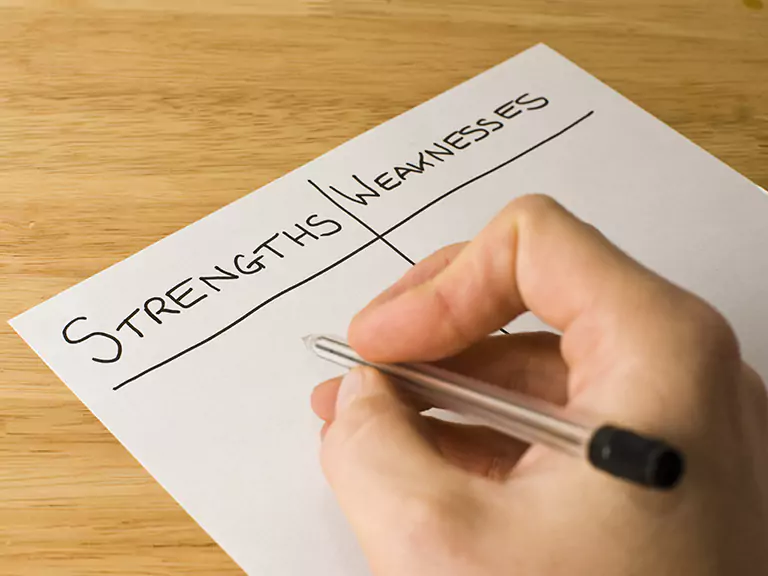
Step 4: Analyze Your Strengths and Weakness
“The biggest challenge for every player is to know themselves — their strengths and weaknesses — and to work tirelessly to improve.” -Arsène Wenger
While your end goal should be to play in the position you want, sometimes the best course of action is to see minutes anywhere on the field. Versatility is key to seeing minutes no matter what system you move into.
Every player wants to play as the center forward. However, not every player can. While it is good to work hard towards this goal, the heaviest weight should be on seeing minutes.
To begin this process you need to review yourself and your play style. Maybe your goal is to play as a left winger, but you currently have greater strengths as a defensive player. Use this to your advantage. Ask your coach if you can practice more as a defensive player. If you have greater strengths in that area, your coach will begin to notice this and potentially move you to get off the bench.
Playing in a certain position does not mean you will play there for your entire career. What it does mean, is that it will increase your chances to get off the bench, increase your on field confidence, and develop your knowledge of other positions. Being a great attacker means that you understand the mind of a defender like it is your own. Understanding how different actions affect the thought process of a defender is critical for increasing your win rate percentages.
Finally, take note of your strengths and weaknesses in the position you wish to play. If you want to be a left winger but struggle in your 1v1 moves and cannot cross the ball with your left foot, your outlined plan should be to improve those things. If you are extremely strong at finesse finishing, take every moment you can to showcase that. Being able to showcase the features that your are strong at while working harder than everyone else will lead to you getting off the bench.
If you aren’t quite sure of specific strengths and weaknesses of yours, ask your coach. He is trained in identifying specific qualities of players and will be able to give you a good review of things to work on to see more playing time.
Step 5: Become A Leader
“Wearing the captain’s armband is not about being the best player on the pitch. It’s about being the first to fight, the first to sacrifice, and the first to stand up for your teammates.” -Carles Puyol
While you may spend every game watching from the sidelines, that doesn’t mean you cannot be a leader. Being a leader does not mean that you score every goal. It means that you lead by example.
There is no better person to lead than one who has fought from the ground up and worked harder than everyone else to reach their goals. Being a captain does not make you a leader. Being the person who sets the intensity by being the first there, last to leave, and not allowing anyone to outwork them, all to achieve excellence, is what makes someone a leader. A leader is aware of those around them and supports their team. They do not criticize but offer advice so that the team as a whole can improve. They are open to and responsive to feedback, allowing it to grow and shape them. These are the characteristics of a leader.
However, one cannot be a leader of others if one cannot first lead oneself. You must choose to do the hard things and be disciplined in your training, emotions, and actions. In an effort to become a leader, you will naturally begin to develop habits, traits, and skills that will inadvertently help you to get off the bench and become a vital asset to your team.
Take the First Step Towards Your Goal
Every player wishes to achieve the same dream. This means your training and vision need to be different than every other player.
Getting off the bench is as much a mental battle as it is a physical battle, no matter the age. It requires thought-out planning, specific goals, and mindset shifts. Combining these things is critical to seeing success in reaching your ultimate goal to get off the bench. However, it takes staying committed through successes and failures.
It can be challenging to accurately assess yourself as a player and pinpoint exactly where or how to improve. It can also be extremely difficult to stay focused and motivated over the long run. Having a trainer to help you review your weaknesses and encourage you as you continue to grow and train can help supercharge your odds of success.
Let’s Get Your Player Started
Call Now: 352-598-5811
Ready to invest in your player’s growth?
Fill out the form below and we’ll get in touch to discuss the best training options based on your goals, schedule, and skill level.
Serving families in Ocala, Belleview, The Villages & surrounding areas.